
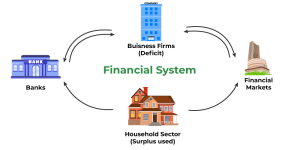
The basis of each economy is its financial system. It acts as a network of organizations, market, tools and laws that help from savings to allocate funds to borrowers and ensure the smooth functioning of commerce and business. Understanding the financial system, people and companies can give you a clear idea of how wealth develops and how it develops within the economy, even though it may seem like a complex web.
Foundation: Institutes that maintain it
The foundation of the financial system is a collection of organizations, including banks, credit unions, insurance providers, and investment companies. Banks are necessary because they offer loans and deposits. For example, when people keep money in a bank account, the bank does not allow them to neutralize it; Rather, it gives money to people or businesses that need it for housing, business expansion, or investments. In contrast, insurance companies provide risk-reward financial security, while investments, such as stocks, bonds, and mutual funds, allow people to grow their money.
These institutions work together to form a cycle that drives innovation and development and directs money where it is needed most.
Role of financial markets
Financial markets serve as a market for the purchase and sale of financial assets, including stocks, bonds, and currencies. These markets, which offer real-time trading, can be digital or physical (like the stock market). While bond markets allow governments and companies to borrow money directly from investors, stock markets allow companies to raise capital by selling shares.
Investor confidence is also reflected in the markets. For example, a slowdown often means uncertainty, but market growth suggests confidence in economic expansion. The market maintains the efficiency and transparency of the financial system by providing a venue for pricing, trading and risk management.
Equirus and Equiture
The financial system is driven by various devices with different functions. Among them are those that are shared:
Investment in businesses or debt devices through stocks and bonds.
Mortgages and loans are devices that provide funds for individual, business or housing needs.
Negate: Contracts that profit from the underlying assets are often employed to reduce risk.
Policies that transfer risk from people to insurers are known as insurance policies.
Each tool acts as a building block, allowing individuals and institutions to methodically achieve their financial goals.
Regulations: Safety Tap
The financial system would be insecure from fraud, accidents and exploitation if there were no rules. For this reason, operations are monitored by regulatory bodies such as central banks, securities commissioners and international control bodies. For example, central banks maintain the financial stability of banks, regulate the money supply, and manage inflation. Rules maintain fairness and trust; Both are important for an economy.
Why does it matter to you
Intensive understanding of the financial system helps people to take intelligent decisions. The system has an effect on daily life, whether it is deciding where to invest, how to borrow responsibly, or how to save for retirement. Businesses also require this because their performance is often determined by their ability to achieve credit, finance and investment possibilities.

In summary, the financial system facilitates the movement of money, maintains stability, and promotes growth, like the communication infrastructure of the economy. Business and people can understand more effectively financial opportunities and difficulties how it operates.