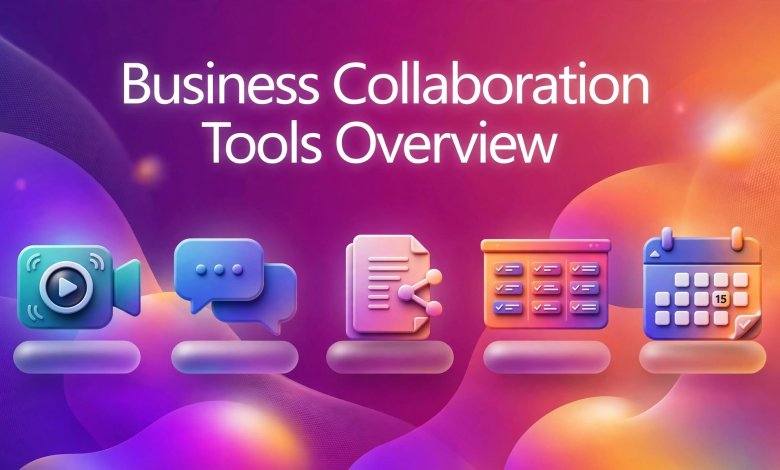
Modern companies are inseparable from effective work and interaction. In the context of globalization, business collaboration software has become an essential tool for maintaining connectivity and productivity among employees, even when located in different places. Business collaboration tools help people communicate, share information, manage projects, organize meetings, and work together effectively. Using such software can optimize workflows and contribute to the organization’s success.
Software for Communication and Messaging
Business communication tools enable employees to contact each other within the framework of messengers. They also facilitate information exchange, help find solutions to problems, and ask questions. Group chats can be created to communicate with colleagues working on the same project and share information. This type of collaboration tools minimizes the use of email, thus saving time on non-work activities.
Software for Video Conferencing
Software for video conferencing is a vital tool in modern business communication. It connects employees, shareholders, and customers and allows everyone to conduct meetings from different locations. Such collaboration tools usually have additional functions, for example, the ability to demonstrate slides, record on-screen activities, and make presentations.
Project Management Tools
This type of business collaboration tools helps manage and control a project. They assist in setting goals, planning tasks, allocating responsibilities, and tracking deadlines. Project managers monitor completed and pending tasks, which helps them evaluate the efficiency of the work and the contributions of individual team members.
Cloud Storage
Cloud storage is a tool for storing data on web servers. It helps in sharing, editing, and storing information about the project. Employees can work on the same documents without transferring them via email or between devices. Cloud storage can also be used to back up information in case of a disaster. It allows for maintaining an integral copy of the data and reducing the risk of loss or unauthorized access.

Software for Collaborative Document Editing
With this type of business collaboration tools, documents can be edited in real-time mode. Several employees can simultaneously work on the same file, spreadsheet, or presentation. In addition, such software usually has commenting and editing options, which allows colleagues to give feedback without additional communication.
Tasks and Workflow Management Tools
Workflow management tools help employees stay productive and accomplish daily tasks. This type of business collaboration tools help set priorities, manage lists of things to do, set deadlines, cross out completed tasks, and track the overall progress. Organizations can use such software to maintain control and manage time efficiently.
Software for Maintaining Calendars and Planning Dates
Calendars help plan, organize, and track all meetings and deadlines. With this type of collaboration tools, businesses can establish schedules and keep all information in one place. Employees can also see the main events and avoid scheduling meetings at inconvenient times. In this case, software helps save time on light communication tasks.
Software Security Tools
Since business collaboration tools usually store the main information about the work of the entire company, it is essential to secure access to them. Organizations should use advanced protection technologies, such as two-step verification, advanced encryption algorithms, and multifactor authentication. Employees should also be trained to maintain cybersecurity and protect the company from fraud.
Choosing Software for Business Collaboration
In choosing software for business collaboration, companies should not fall victim to the marketing tricks of sellers. A sufficient number of tools, their cost, functionality, level of protection, and compatibility with other software should be considered. The choice of software depends on the number of employees, budget, functionality, security level, and other factors. The capabilities of the chosen application should meet the requirements and help in specific business processes.
Conclusion
Thus, business collaboration tools are essential for maintaining and developing communication in the workplace. Messengers, video conferencing, project management systems, cloud storage, collaborative document editing, calendars, tasks, and workflow management tools help in the business processes of any company. However, technology is only the context in which communication takes place. Businesses need to optimize the work of employees with such software and carefully select the most relevant programs.

In addition, companies should focus on developing processes for maintaining and updating data and protecting it from intrusion.
Thanks