Insurance fraud costs tens of billions of dollars per year and you and I pay for that in the form of increasing premiums. Every insurance policy from life, to auto, to disability has elements where the risk of fraud occurs, from phantoms reporting car accidents to faking injury claims. Here’s how fraud is identified now.
Fraud is defined as an intentional misrepresentation that is made either knowingly, recklessly, or carelessly with the intent to gain an undue advantage or acquire something of value through this falsification.
Types of Insurance Fraud
Common types include phantom reports for auto claims; hit-and-run incidents and staged collisions; falsifying damages or injury reports to insurance adjusters; broker’s insurance premiums skimmed; government, state, department of insurance documents being forged by customers; insurance employees pilfering payments or not notifying policyholders of the status of premiums; and other forms of dishonest activity.
Data Analytics and Pattern Recognition
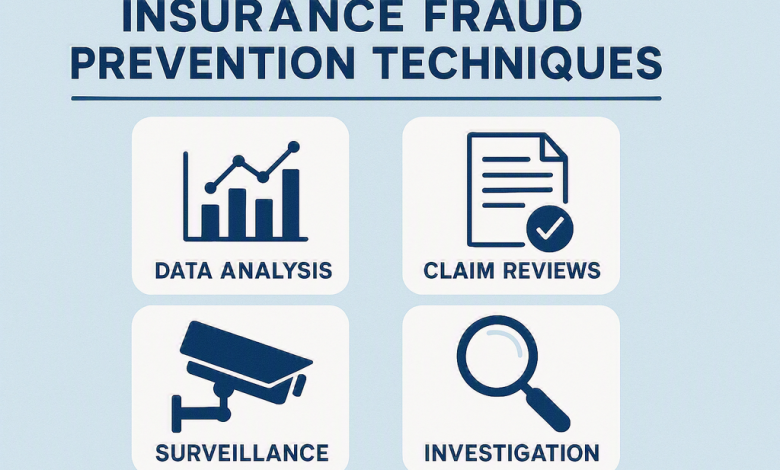
This is perhaps the most important technique used to thwart insurance fraud. Insurance firms can sift through massive quantities of data by applying this approach. The types of things you look for when doing this include comparisons of newly filed claims with past insurance fraud; identification of a policyholder that has previously defrauded the insurance company; investigation of unusual patterns of claims for a policyholder; and identification of consistently claimed items and repairs for claims.
The principal concept: when you study a customer group, there will be a sub-group of clients where the insurance claims pattern will be identical. Insurance fraud claims pattern recognition is a deep, comprehensive examination of all types of claims that belong to various policyholders.
Machine Learning and AI
This is a specialized area within data analytics. It utilizes a variety of automated learning methods, called algorithms, to allow the insurance carrier to better identify potential claims fraud.
ML/AI helps insurers easily identify potentially fraudulent claims, prioritize and route likely fraud to the experts for review, detect the manipulation of imagery and documentation, monitor the communications occurring between and among clients and other interested parties, and conduct full, thorough investigations.
Human Investigations Remain Key
Though technology plays a vital role in identifying fraud, human investigations remain key. Investigations involve a thorough analysis of all documents that are submitted as part of a claim;

an on-site loss evaluation to confirm the facts reported in an insurance claim; a review of comprehensive reports; interviews with customers, victims, or any involved parties; and behavioral analysis of a policyholder.
Employee Training
Insurers often employ vigorous, updated training programs so that their employees will recognize the various methods of insurance fraud schemes. Since customers will frequently interact with staff, employees can recognize specific behaviors or circumstances that might signal fraud. Typical training methods include educating staff on how to detect fraud, creating uniform standards for policies and procedures, and tracking a log of claims of interest to the insurer.
Customer Engagement and Education
With so many schemes targeting individuals or created by the approach of a policyholder, insurance companies are reaching out to policyholders. By informing customers on how common forms of insurance fraud occur, it encourages vigilance and helps policyholders to report suspected fraud.
Here is some advice to avoid being targeted by insurance fraud or being involved as a party to a fraudulent act: be alert to impossibly low insurance premiums; be meticulous about the storage and security of all insurance documents and policies; be wary of unusual or unfamiliar insurance providers or offers; never make fraudulent claims or use falsified insurance details, as such activities are a criminal offense; if a deal or offer seems too good to be true, then it probably is; and report suspected illegal activities involving insurance companies and policyholders to the insurer.
The Future of Insurance Fraud Detection
The increasing sophistication of fraudulent schemes means that the methods of detecting fraud will also continue to evolve. In the coming years, insurance carriers may utilize technologies such as blockchain for verifying the veracity of insurance claims, advanced biometrics for identity confirmation,

and next-generation analytic algorithms for fraud pattern recognition to ensure greater precision.
Thanks