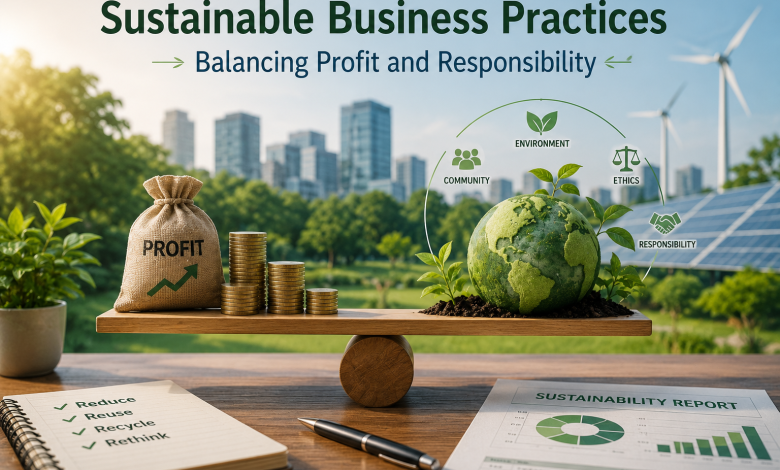
For generations, there was a conventional wisdom that you had to make a choice: good or good business? The vision of one company geared toward growth and success, and another dedicated to ethical practices.
In the last several years however, that picture has changed radically from two mutually exclusive ideals to ones which, in many ways, are entirely complimentary.
But that’s not to say that the idea of “green business” has always meant the idea of “good business.”
Sustainable business is a path to growth
When you think about it, you probably tend to think about words like “sustainability” in a very narrow and potentially negative way: a business cost that cuts into profitability.
If we go by this thinking, the best thing a company could possibly do for their bottom line is ignore all sustainability factors! When organizations invest in such areas as waste reduction, effective supply chain processes, and circular economy principles.
you will find significant cost savings, better client relationships, and brand enhancement. Sustainable business, as a way of generating profit, changes the direction from reducing negative impacts to building positive ones.
The Green Machine
There is a common perception that all sustainable business initiatives must get in the way of how business gets done on a daily basis, however, a great number of sustainable business initiatives will save money and resources.
This saves companies hundreds of thousands and potentially millions through reduced costs for utilities, water, waste removal, and supply chain optimization.
Ethical Sourcing
If you implement transparency then you also build trust. In today’s world, your clients, your investors, your partners, your employees, and yes.
even governments are looking for a complete transparency into your company’s supply chain to understand ethical business practices, from ethical sourcing of materials to treating their own employees equitably.
For the HR function, sustainability means a commitment to not only manage impacts but also provide programs, benefits and employment stability to build a strong and supported workforce. An ethical company is also an effective company.
Measure your Sustainability
If your goals in sustainability, such as carbon footprint reduction, waste elimination or employee benefits programs require tangible metrics, it’s important to measure progress against these markers.
Companies failing to define their sustainability progress are often criticized for making a minimum effort that will pass muster publicly.

The Greenwashing Trap
Beware the “greenwashing” tactics when marketing your company’s environmental initiatives, such as advertising your business as green and sustainable when your actually commitment or actions fall far short. Transparency and a demonstrable, concrete commitment to reaching specific goals will be rewarded in this world, by the customer and the regulators.
Thinking Long Term When We Aim for Sustainability
Another commonly held misconception that needs to be shed is the idea that long term value and immediate goals are two opposing ideals that cannot be combined in sustainable businesses.
These businesses recognize potential risks and develop sustainable longer term values for the future.
The Future is Green and Profitable
It’s far from a pipe dream for companies that achieve a balance between profit motivation and environmental responsibility.
By strategically embedding practices of sustainability, businesses benefit not only the planet and the community but can also be among the best companies in business.
The power of Collaboration in Sustainability
It goes without saying that sustainable businesses aren’t born from a singular entity alone. All stakeholders-including its employees, partners, and community-working collaboratively in pursuit of a organization’s sustainability objectives will enable successful initiatives.
Sustainability drives Innovation
If there is ever a potential to have the ability to generate new and exciting innovations, a business need that arises out of sustainability efforts may be that driver. For example, by developing a more resource-efficient business model.

innovating its supply chain process or a more sustainable technology to provide its goods or services.
Thanks